🧂
Salt cell
The cell does the chemistry work, but it needs correct flow, clean equipment, and proper controls.
A salt chlorination system depends on circulation, flow, controls, schedules, sensors, and electricity. Solar Pool Man treats the salt system as part of the whole pool-power chain, not as a lonely box blinking near the equipment pad.

Salt systems are tied directly to pool circulation. If the pump is off, flow stops. If flow stops, the salt system cannot operate correctly. That means pump scheduling and salt generation belong in the same design conversation.
Solar Pool Man starts with the simple chain: pump runs, water flows, controller allows operation, salt cell generates chlorine, pool chemistry stays on track.
Clean water depends on routine. Salt systems help automate chlorine production, but they still rely on powered equipment and proper circulation. The salt cell is not a wizard. It has requirements.
The cell does the chemistry work, but it needs correct flow, clean equipment, and proper controls.
The pump moves the water through the system. Without circulation, the salt system is just a box with opinions.
Timers, relays, sensors, apps, and pool controllers often decide when the salt system operates.
When practical, salt generation and pump runtime should be reviewed around solar production. The goal is to make useful pool work happen while the sun is helping.
Salt generation depends on water movement. Pump runtime is the first scheduling fact.
The salt controller, automation panel, and flow sensor determine when generation is allowed.
Pump and salt operation should be coordinated, not allowed to wander into peak-rate comedy.
Controls may deserve backup, while full operation depends on pump, runtime, and battery capacity.
“A salt system without circulation is just a chemistry professor locked out of the classroom.”
— Solar Pool Man, reading the flow-sensor warning with respectDuring a power outage, the salt system should be considered with the pump and pool automation. Backing up only the salt controller may not accomplish much if circulation is not available.
A practical backup plan may support selected controls, limited pump runtime, and automation logic. The exact answer depends on circuit layout, equipment type, battery capacity, and homeowner priorities.

If the pump and salt system can do more useful work during strong solar production hours, the backyard may reduce expensive grid dependence. The schedule still must respect water quality, pool size, chemistry, manufacturer requirements, and actual use.
“Make chlorine when the sun is paying attention.”
— Solar Pool Man, politely bossing around the scheduleIt may not be the largest load, but it is part of the chain that keeps the pool clean and comfortable.
| Item | What To Check | Why It Matters |
|---|---|---|
| Salt controller | Voltage, breaker, automation connection, display status | Controls the generation process and may be tied to other pool equipment. |
| Salt cell | Cell model, condition, installation location, flow direction | Generation depends on the cell working properly in the circulation path. |
| Flow sensor | Flow requirements, sensor status, error behavior | The system may shut down if proper circulation is not detected. |
| Main pump | Runtime, speed, voltage, schedule | No circulation usually means no salt generation. |
| Automation panel | Timers, relays, app settings, interlocks | May coordinate pump operation and salt-system operation together. |
| Backup circuit | Critical-load panel, inverter capacity, battery runtime | Determines whether salt-system support is practical during an outage. |
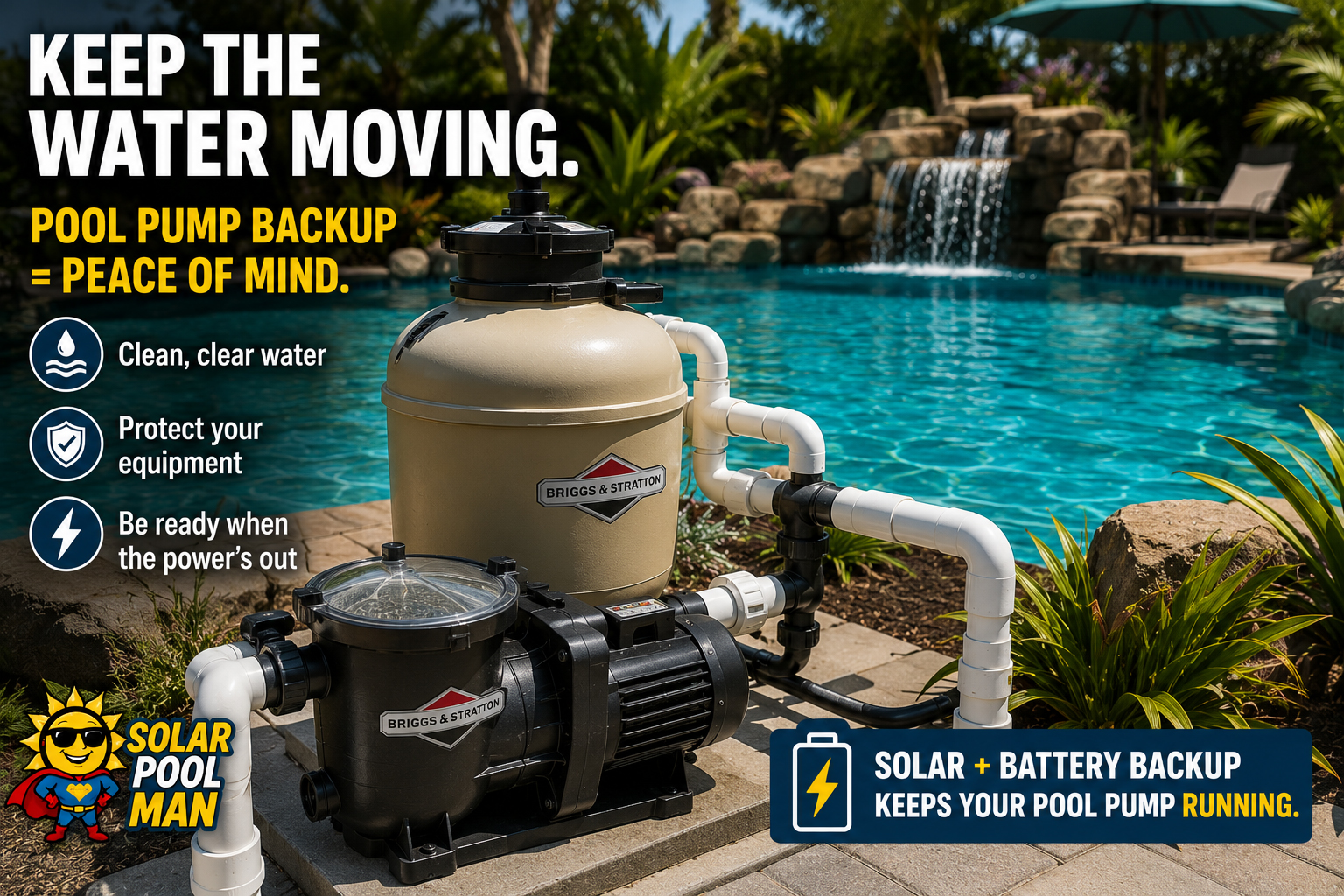
The salt system starts with circulation. Review the pump before promising pool chemistry.
Review Pump Backup
Automation may decide when the pump runs and when the salt system can generate.
Open Automation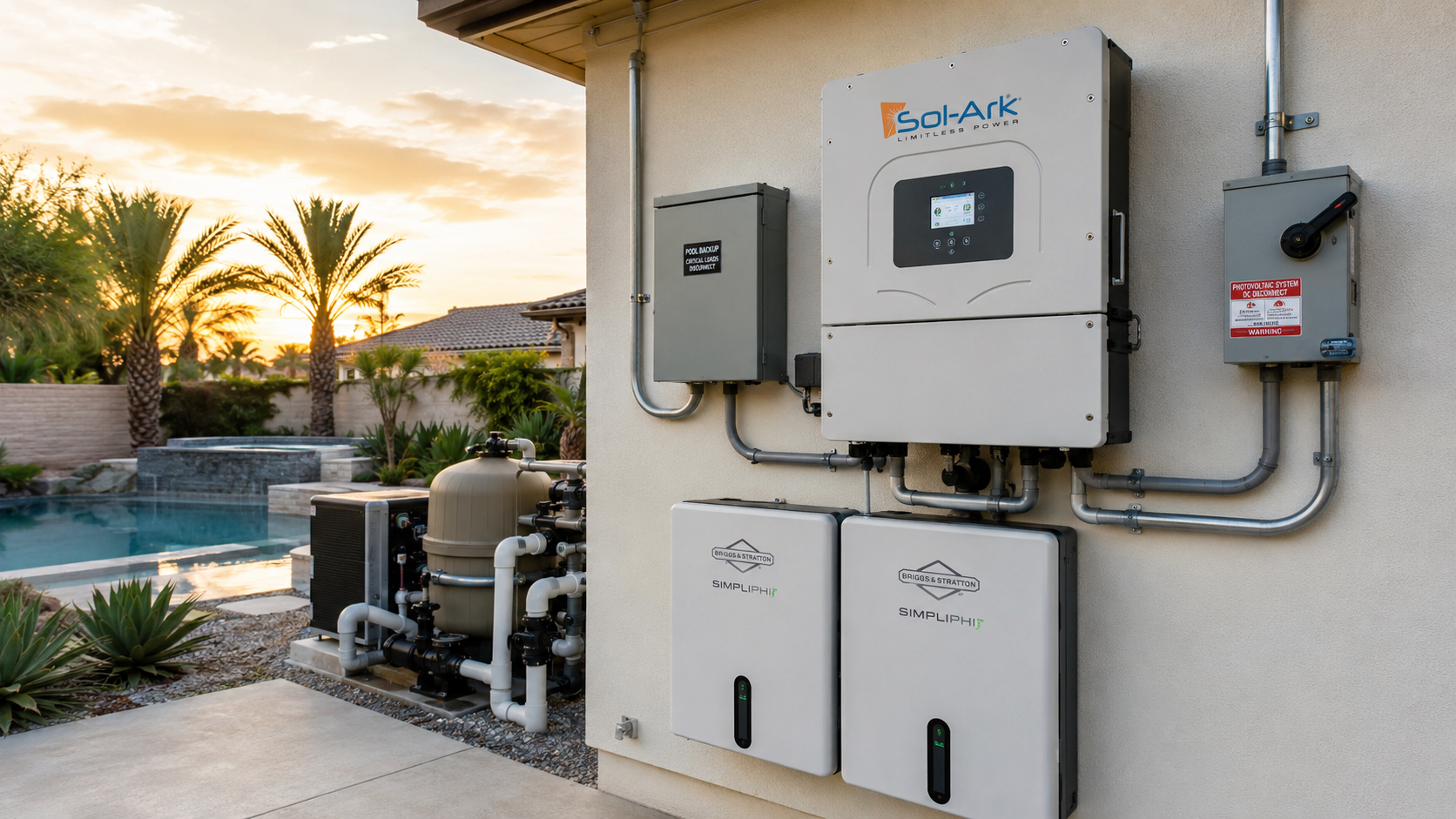
Battery support should be matched to pump runtime, controls, inverter capacity, and chemistry goals.
Review Battery BackupDo not treat the salt system as separate from the pump. The pool stays clean because equipment works together. Solar and battery planning should respect that chain.
Salt chlorination systems involve pool chemistry, circulation, electrical controls, automation, sensors, manufacturer requirements, and code-compliant wiring. Solar and battery design should be reviewed with qualified pool and electrical professionals before backup assumptions are made.