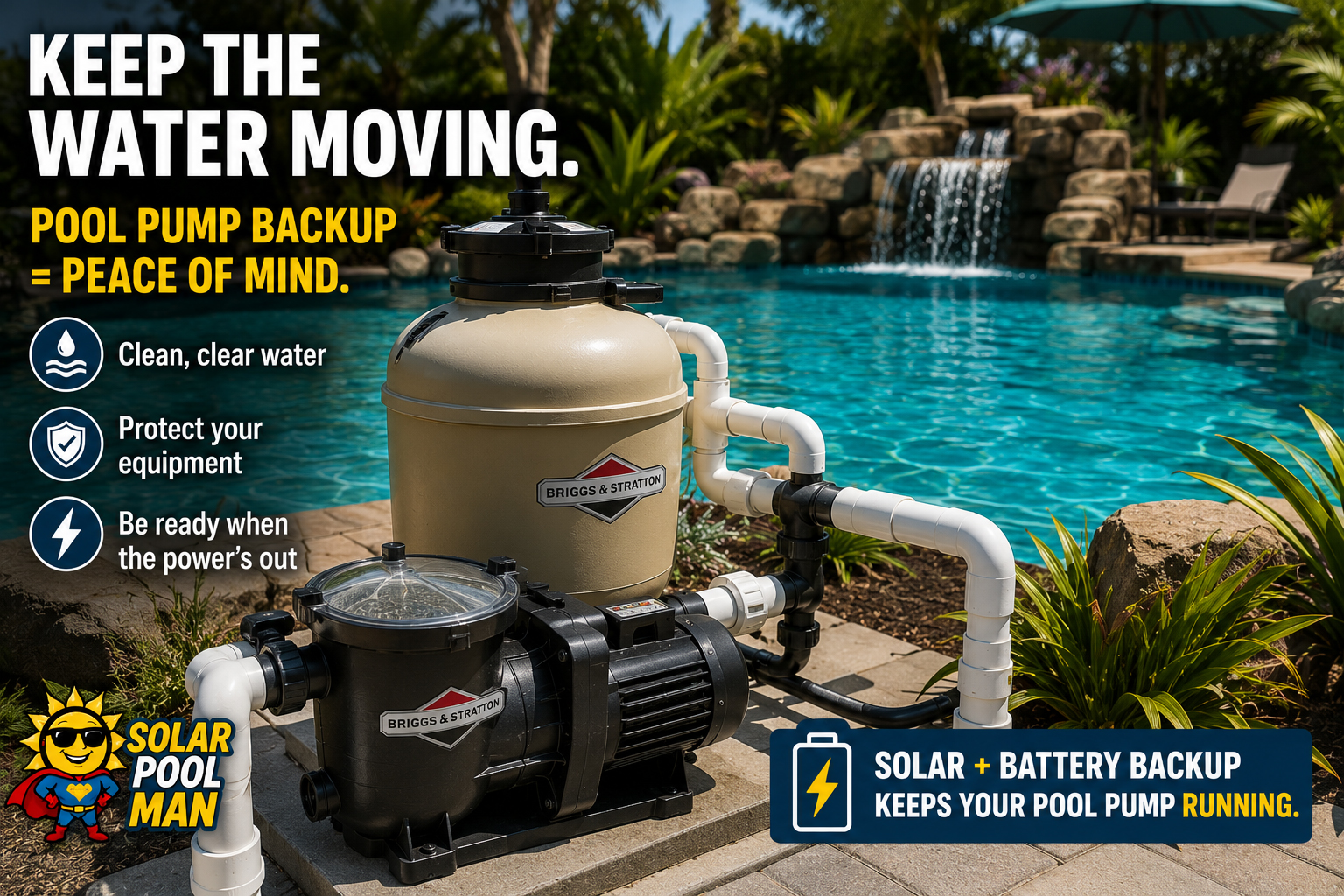
Pool Pump Backup
The main pump is usually the first and most important pool load to review.
Review Pump BackupSolar Pool Man answers the backyard questions homeowners actually ask: can the pool pump be backed up, should it run during solar hours, what about lights, what about salt systems, and why does the electric meter look so happy near the deep end?

A pool is not one load. It is pumps, controls, salt systems, heater controls, lights, water features, automation, and outdoor circuits. Solar and battery planning gets much better when each load is named.
The FAQ below is written for homeowners who want practical answers before the backyard becomes a battery math experiment with cupholders.
These answers are general. Real designs depend on equipment, wiring, load size, utility rules, code requirements, inverter capacity, battery capacity, and homeowner priorities.
Often, yes, but the real question is how the pump is connected, when it runs, how much power it uses, and whether the solar system is designed to offset that load. Pool pumps are usually a major backyard load, so they deserve a proper review.
Possibly, but only if the pump circuit is properly included in a backup design and the inverter and battery system can support the pump’s electrical behavior. Pump voltage, startup behavior, variable-speed settings, breaker layout, and battery runtime all matter.
Sometimes. The pump should be interviewed first, not automatically hired. Limited pump runtime may matter for water quality or equipment protection, but the backup plan should be based on real load data and realistic battery capacity.
A variable-speed pump can help reduce energy use and improve scheduling flexibility, but it still needs a smart schedule. Solar Pool Man wants the pump to work during useful solar hours where practical, not wander into expensive periods without supervision.
Selected pool, pathway, and safety lighting can be good backup candidates because lighting may provide high value with relatively modest loads. The circuits, transformers, controls, GFCI protection, and automation should still be reviewed by qualified professionals.
Heating requires caution. Some systems mostly need control power and circulation. Others are very large electric loads. Spa heating, electric resistance heating, and heat pumps should be reviewed carefully before anyone promises battery backup.
A salt system depends on circulation. Backing up the salt controller alone may not help if the pump is not running. Salt-system backup should be reviewed together with pump runtime, flow sensors, automation, and chemistry needs.
Decorative water features usually do not deserve priority during an outage. Functional water features, such as pond pumps supporting fish or oxygenation, may need a much more serious review. Purpose matters more than prettiness.
It can be useful, but only if the circuits controlled by the automation are also designed correctly. A powered controller cannot run equipment that is not on the backed-up side of the system.
Solar can help offset daytime loads, and smart scheduling can move appropriate pool work toward solar production hours. Battery backup may also support selected loads. The exact value depends on current rate plans, utility rules, equipment schedules, and system design.
Usually no. A good backup design separates critical, useful, optional, and luxury loads. The battery should not be forced to carry every spa jet, heater, fountain, party light, and mystery outlet.
Gather photos of the equipment pad, electrical panel, pool automation panel, pump labels, heater labels, salt system, breaker labels, utility bill, and current pump schedule. The more facts available, the better the solar and battery conversation.
The comedy is optional. The load review is mandatory.
| Question | Fast Answer | What To Check |
|---|---|---|
| Can solar offset the pool pump? | Often yes. | Pump wattage, schedule, solar production, rate plan. |
| Can battery backup run the pump? | Possibly. | Voltage, startup behavior, inverter capacity, battery runtime. |
| Are pool lights good backup loads? | Often useful. | Lighting circuits, transformers, controls, safety priority. |
| Should heaters be backed up? | Use caution. | Heater type, controls, pump dependency, electrical demand. |
| Can automation help save money? | It can. | Schedules, relays, pump settings, peak-hour overlap. |
| Should decorative water features run during outages? | Usually no. | Purpose, pump load, battery priority, living-water needs. |
“The answer is probably in the equipment pad, hiding behind a label no one has read since 2009.”
— Solar Pool Man, flashlight in one hand, rate schedule in the other
The main pump is usually the first and most important pool load to review.
Review Pump Backup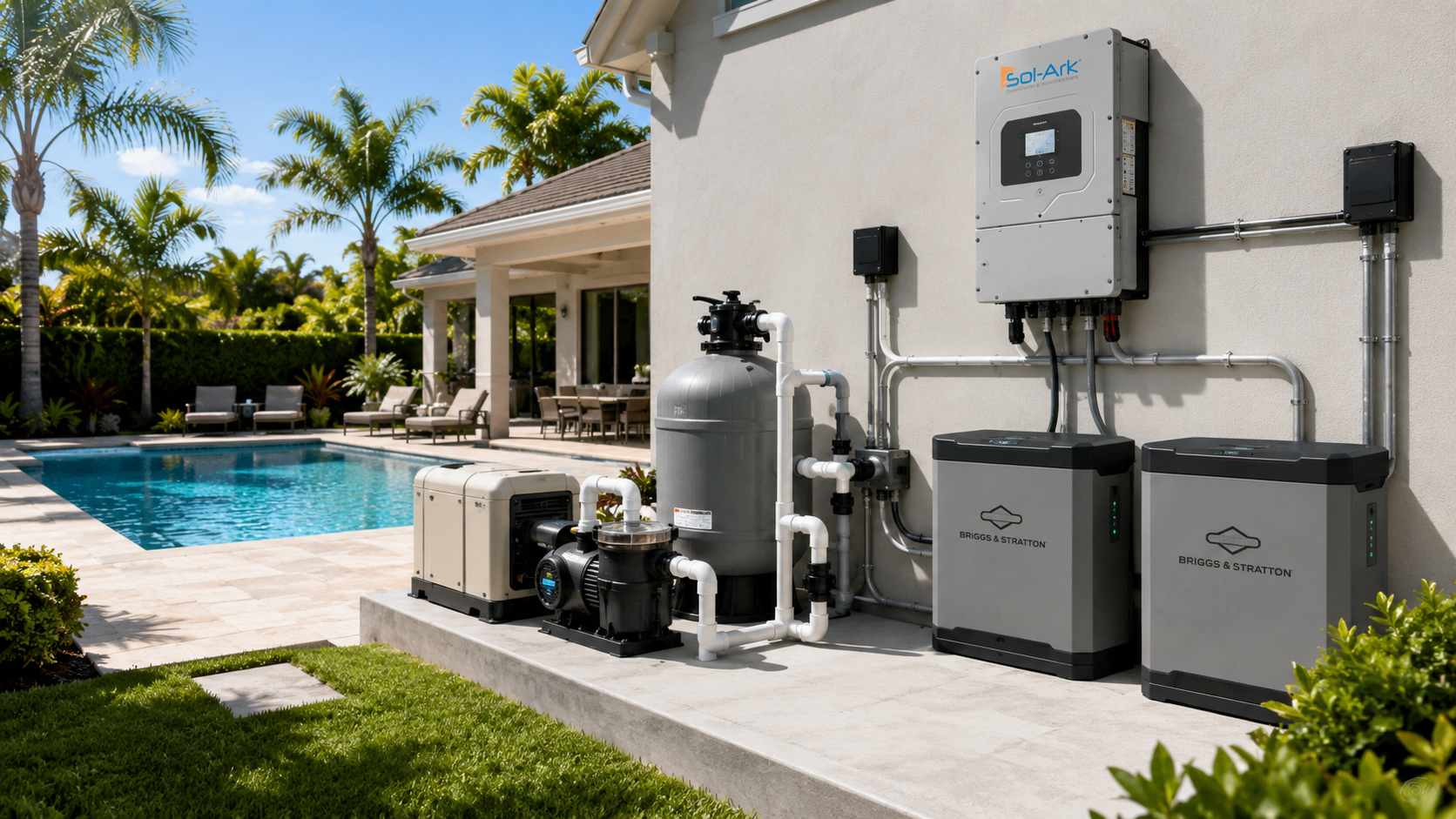
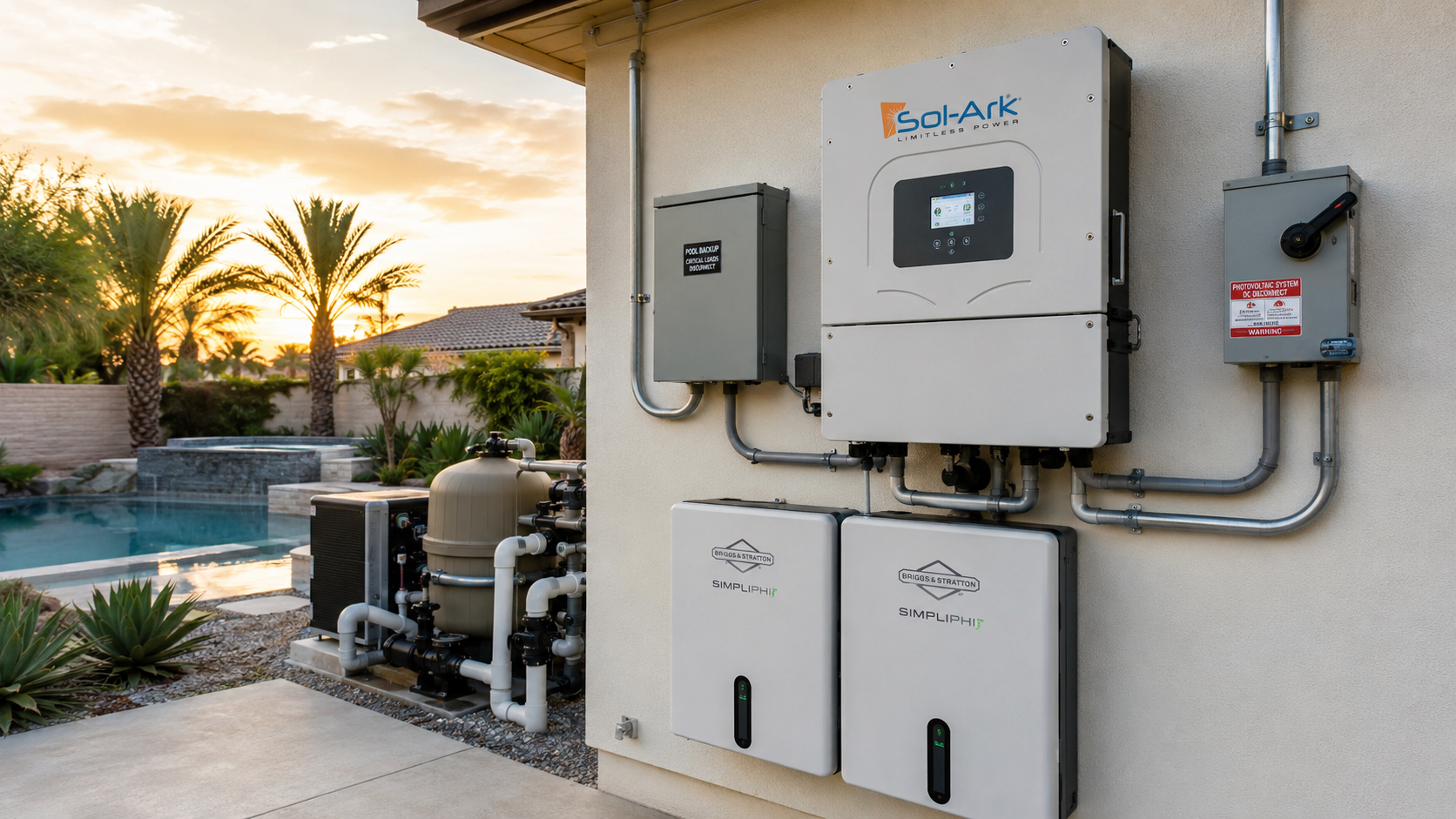
Batteries need selected circuits, realistic runtime, and disciplined load planning.
Review BackupThe pool may be glamorous. The design should be grounded.
Pool electrical systems, solar systems, batteries, inverters, critical-load panels, transfer equipment, GFCI protection, grounding, utility rules, rate plans, and local code requirements must be reviewed by qualified solar, electrical, and pool professionals. Final decisions should be based on real equipment and real site conditions.