📲
Schedules
Pump runtime, salt generation, water features, lighting, and spa modes all depend on correct scheduling.
Timers, relays, valves, apps, sensors, salt systems, pump schedules, heater controls, lights, waterfalls, spa modes, and mysterious buttons all meet inside the automation conversation. Solar Pool Man respects the brain because the brain decides what runs.

The pool automation system often decides when the pump runs, when the salt system produces, when the spa heats, when the waterfall performs, and when the lights glow. That means automation can either support a solar strategy or sabotage it with bad schedules.
Solar Pool Man starts by reviewing what the automation panel controls, how it is powered, and whether its schedules should be adjusted around solar production and peak-rate periods.
The automation panel may not be the biggest electrical load, but it can be the conductor. Without controls, the pump, valves, lights, heater, spa, and salt system may not cooperate.
Pump runtime, salt generation, water features, lighting, and spa modes all depend on correct scheduling.
Automation panels may control relays and valve actuators that decide where water goes and what turns on.
Backing up selected control circuits can make sense if the connected equipment and battery strategy also make sense.
A good review separates the automation panel from the equipment it controls. The panel may be small, but the loads behind it can be large.
Daily circulation schedules, variable-speed settings, filtration windows, and runtime logic.
Salt generation timing, flow requirements, controller links, and chemistry coordination.
Spa jets, heat calls, valve positions, blower controls, and homeowner comfort expectations.
Heater controls, pump dependency, temperature setpoints, and equipment protection.
Pool lights, spa lights, landscape lights, scene controls, and nighttime schedules.
Fountains, waterfalls, bubblers, valves, feature pumps, and decorative schedules.
Remote control, alerts, schedules, homeowner habits, and the dangerous “why is this on?” button.
Automation can help keep heavy pool work out of expensive utility periods where practical.
“The automation panel is small, but it bosses around the whole wet orchestra.”
— Solar Pool Man, listening for the relay clickA pool automation schedule should be reviewed against solar production, peak-rate periods, water quality needs, heating goals, and homeowner use. Bad schedules can make good equipment behave like a utility-bill prank.
When practical, the pool should do more useful work during daylight solar hours and less unnecessary work during expensive utility windows.

Supporting an automation controller during an outage can be useful, but it must be coordinated with the actual equipment. A powered controller cannot run a pump that is not on the backed-up circuit. Solar Pool Man does not back up wishful thinking.
“A smart controller on a dead circuit is just a very confident paperweight.”
— Solar Pool Man, refusing fake backupThe label “automation” is not enough. The design needs the specific controlled loads, schedules, and circuit relationships.
| Automation Item | What To Check | Solar / Backup Note |
|---|---|---|
| Main controller | Power source, breaker, controlled circuits, manufacturer settings | May deserve backup only if connected loads are also planned correctly. |
| Pump schedule | Runtime, speed settings, filtration windows, peak-hour overlap | Often the most important schedule to align with solar production. |
| Salt generation | Generation percentage, pump dependency, flow sensor behavior | Must be coordinated with actual circulation. |
| Heater controls | Setpoints, mode, pump dependency, fuel/electric relationship | Heating can be a major load or a control-only issue depending on system type. |
| Lighting scenes | Transformers, relays, timers, low-voltage circuits | Selected safety lighting may be a practical backup load. |
| Water features | Pump size, schedule, relays, valve actuators | Decorative features may be scheduled off during outages or peak periods. |
| App control | Wi-Fi, controller access, homeowner habits, remote schedule changes | Convenient, but should not override the energy plan casually. |
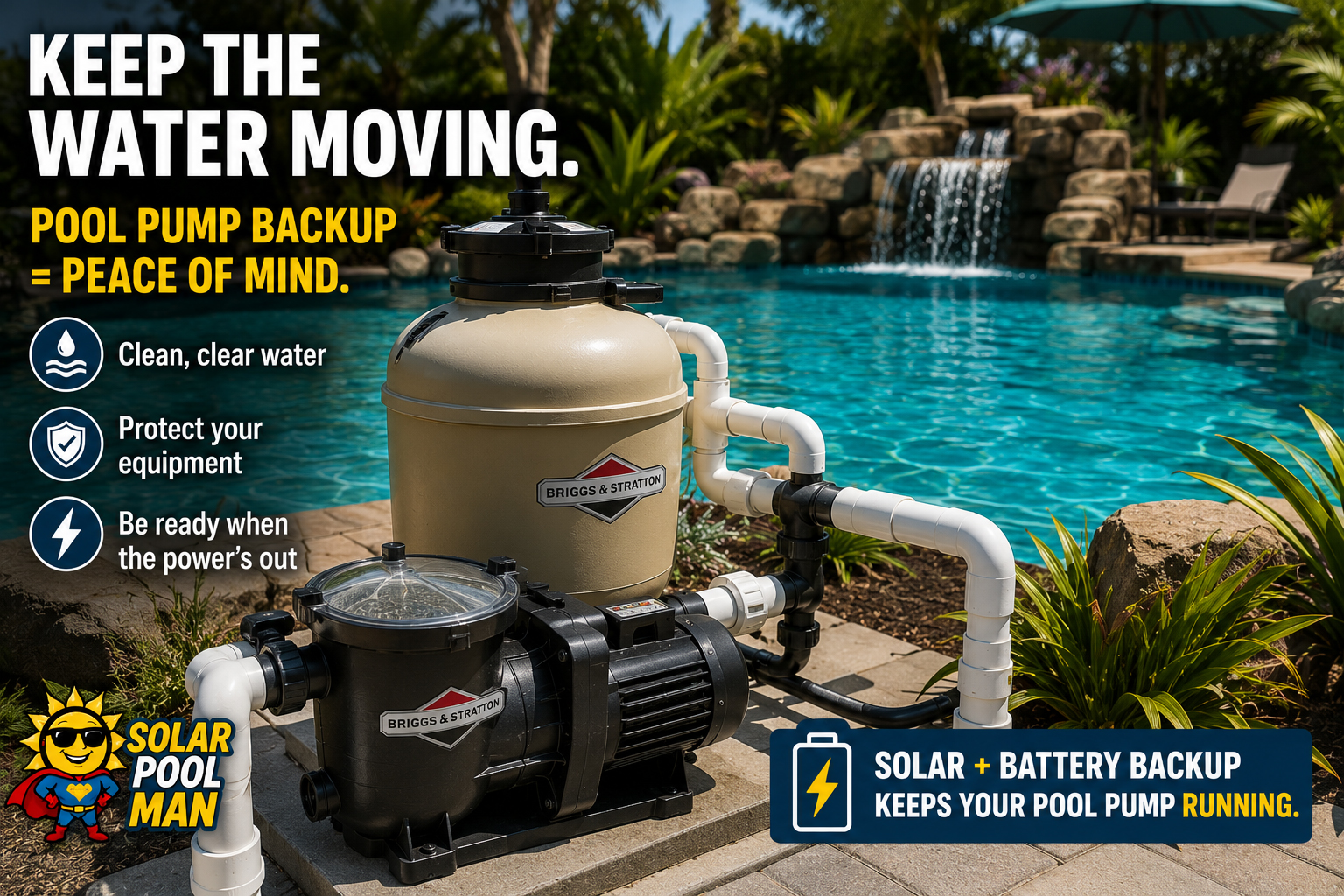
Automation often controls the pump. The pump is usually the first major load to review.
Review Pump Backup
Salt generation needs pump runtime and automation logic that understands flow and schedule.
Open Salt Systems
Waterfalls and fountains often depend on automation, relays, valves, and pump schedules.
Open Water FeaturesAutomation should not run expensive loads blindly. Review the controller, schedules, relays, valves, and circuits so the backyard works with solar, battery backup, and peak-rate reality.
Pool automation involves electrical controls, relays, valves, motors, heater logic, salt systems, lighting, low-voltage equipment, manufacturer rules, and code-compliant wiring. Solar and battery design should be reviewed with qualified pool and electrical professionals before backup assumptions are made.