⏱️
Runtime matters
The question is not just whether the pump runs. The question is how long it runs, when it runs, and whether that schedule collides with expensive utility periods.
Pool circulation is not decorative. It supports filtration, water quality, chemical mixing, heating strategy, salt systems, and the basic fact that a pool should not turn into a science project during a blackout or peak-rate ambush.
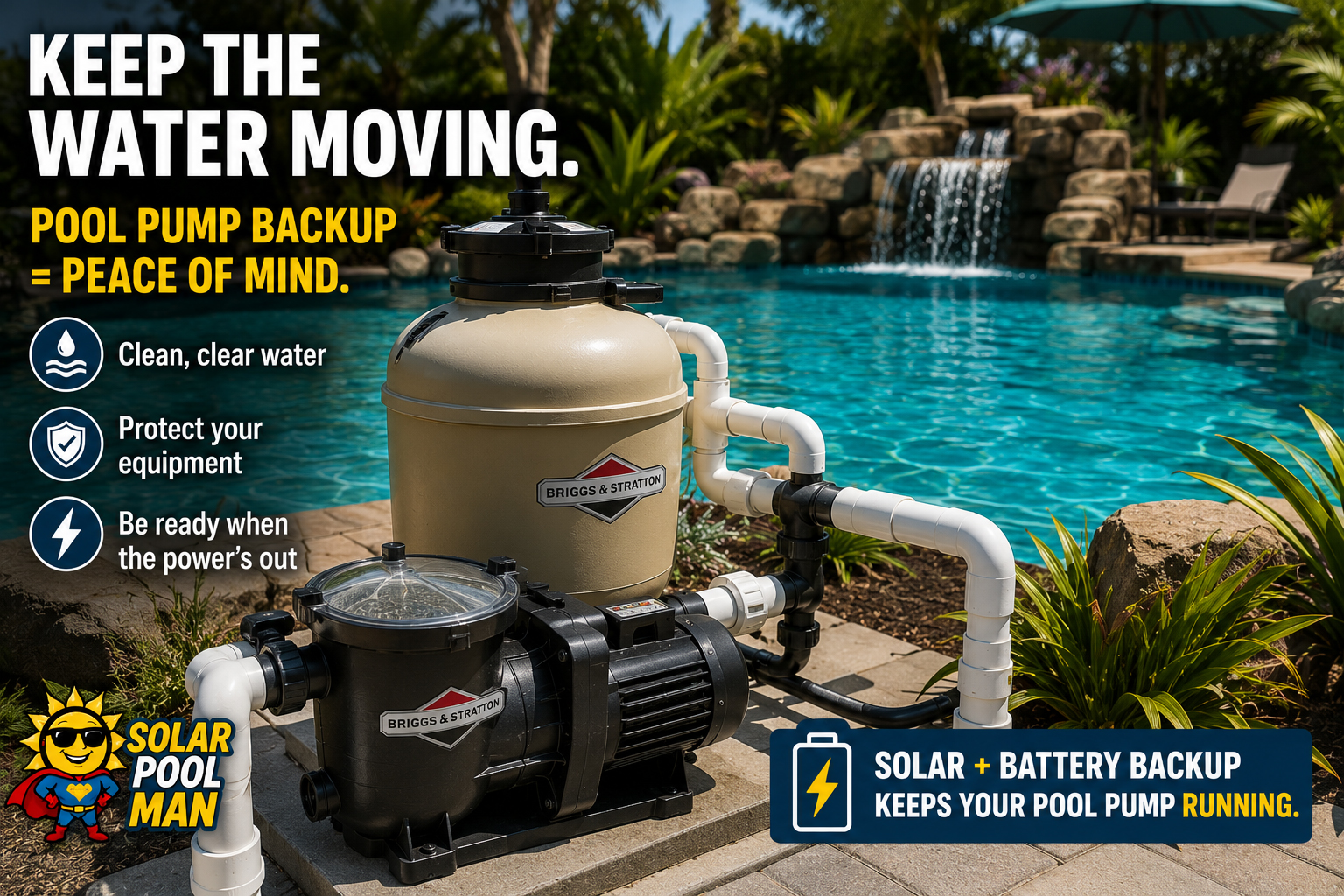
A pool pump moves water through the filter, supports chemical distribution, and helps the entire backyard system stay alive. It may be quiet in the equipment area, but electrically it can be one of the most important loads on the property.
Solar Pool Man starts with the pump because the pump is where pool power becomes obvious: motor size, runtime, voltage, schedule, and backup priority.
The pump may be hidden behind a gate, but the utility bill knows exactly where it lives. Runtime, speed, and schedule can change the entire backyard energy story.
The question is not just whether the pump runs. The question is how long it runs, when it runs, and whether that schedule collides with expensive utility periods.
Variable-speed pumps can be part of a smarter strategy, but they still need correct scheduling and practical expectations.
A pump does not automatically belong on battery backup, but it should be reviewed as a possible critical backyard load.
Battery backup should be intentional. The goal is to support the loads that matter most, not drag the entire backyard resort through the inverter during an outage.
Nameplate data, voltage, breaker size, pump type, and real runtime need to be reviewed.
Is the goal daily bill reduction, outage survival, water quality, or all of the above?
The backup plan may support only selected pool circuits, not every luxury feature.
Battery runtime depends on pump size, speed, schedule, battery capacity, and other loads.
“A pool pump is not a decoration. It is a motor wearing a pool-service disguise.”
— Solar Pool Man, standing near the equipment pad with suspicious gogglesWhen possible, pool pump operation should be reviewed around solar production hours. A pump that can do more of its work while the sun is producing may reduce grid dependence and help avoid the worst parts of the utility day.
The schedule must still respect pool needs, equipment limits, safety, filtration requirements, local rules, and the homeowner’s actual use of the pool and spa.

Backup design is about priorities. Maybe the main pump gets limited runtime. Maybe only controls and selected support equipment are backed up. Maybe the pump is not backed up at all. The point is to decide deliberately before the power goes out.
“The waterfall can take a nap. The circulation pump gets a meeting.”
— Solar Pool Man, ranking backyard loads without emotionThe better the information, the better the design conversation. Solar Pool Man does not guess. He reads labels, schedules, breakers, and utility bills.
| Question | Why It Matters | Design Impact |
|---|---|---|
| What pump type is installed? | Single-speed, two-speed, and variable-speed pumps behave differently. | Affects runtime, load size, and scheduling strategy. |
| What voltage and breaker size? | The electrical connection defines circuit planning. | Affects inverter and critical-load-panel decisions. |
| How many hours does it run? | Daily runtime drives energy use. | Affects solar offset and battery runtime expectations. |
| When does it run? | Schedule determines whether the pump hits peak utility periods. | Affects savings strategy and automation settings. |
| What else depends on it? | Salt system, heating, water features, and automation may interact. | Affects which circuits need coordinated backup. |
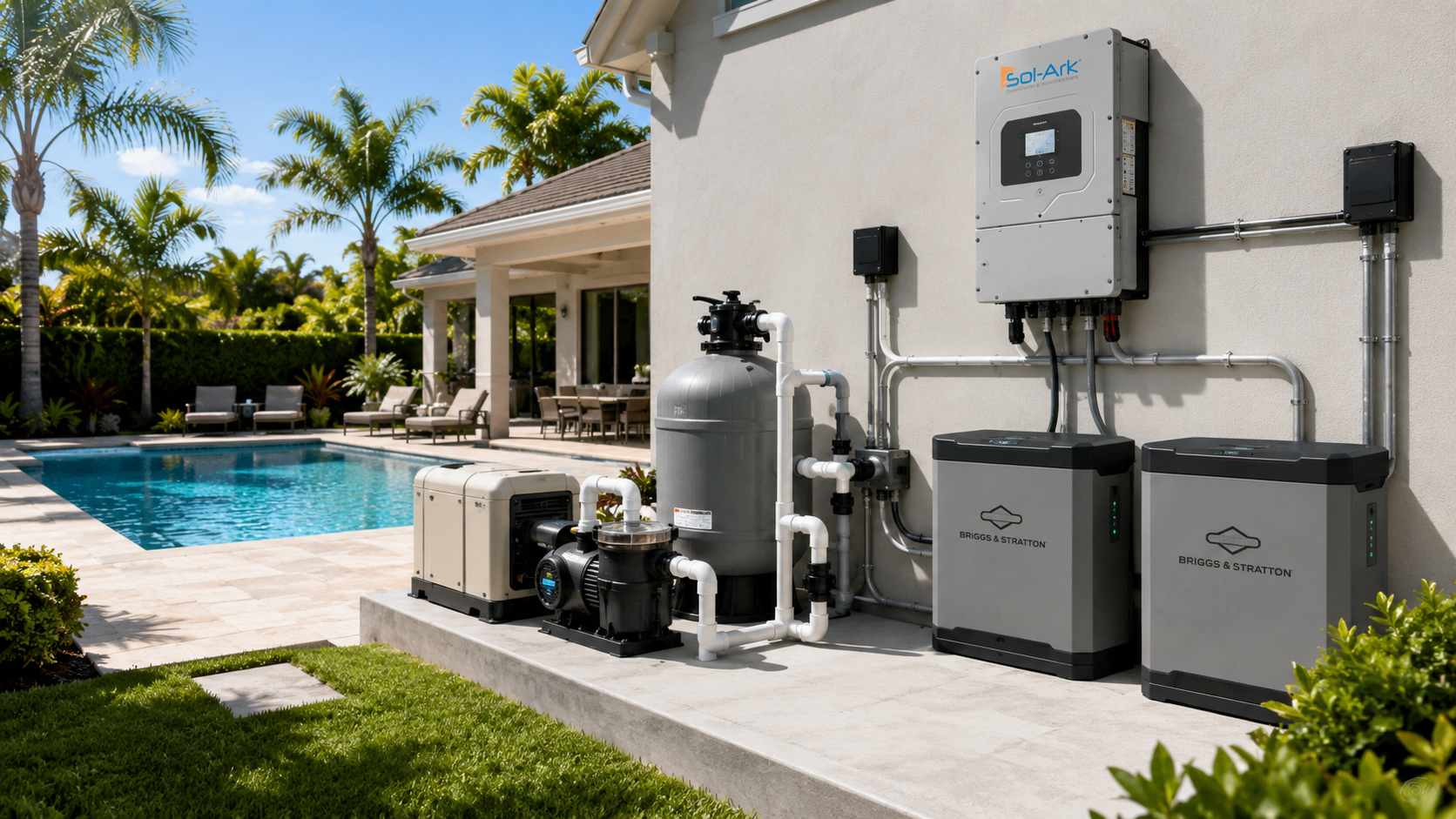
Pumps are only the beginning. Review the equipment pad, automation, lights, salt system, and water features.
Review Equipment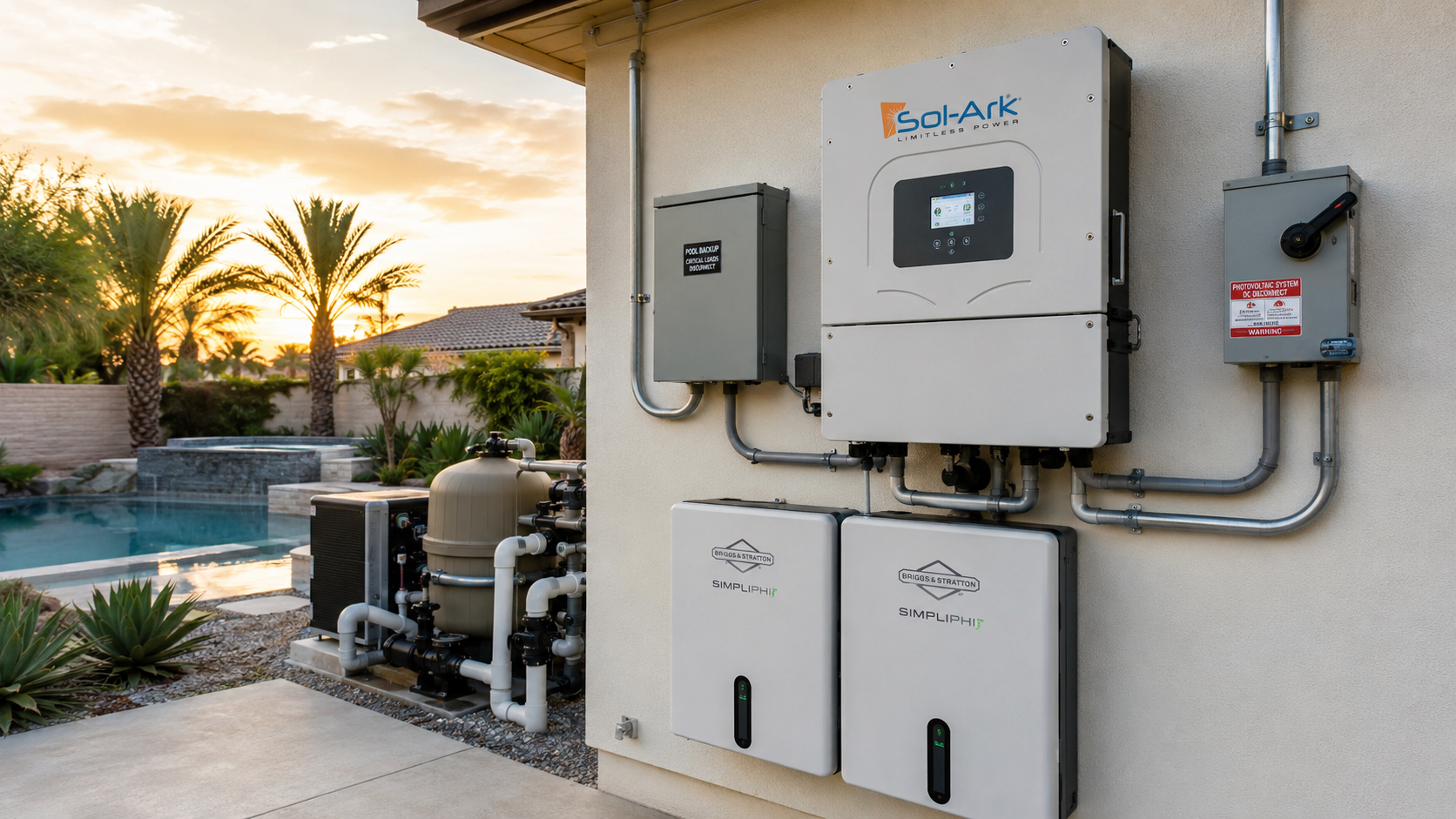
Battery backup is not magic. It is capacity, circuit selection, load management, and realistic runtime.
See Battery Backup
The pump may be doing its job. The schedule may be helping the utility bill do comedy.
Open Rate PageABC Solar can review the solar and battery side of the conversation. Pool equipment should also be evaluated with qualified pool and electrical professionals. Pump size, voltage, startup behavior, breaker layout, battery capacity, and code requirements all matter.