♨️
Spa demand
Spa heating is often more immediate than pool heating. That makes runtime, pump coordination, and homeowner expectations especially important.
Pool and spa heating is where comfort, runtime, controls, pump schedules, fuel type, electric load, and homeowner expectations all collide. Solar Pool Man does not assume the heater belongs on backup. He starts by asking what kind of heater it is, what controls it, and what the pool actually needs.

A pool or spa heater usually does not operate in isolation. It needs circulation, controls, safety logic, valves, automation, and a working equipment pad. That means the solar and battery conversation must include the whole heating chain, not just the heater label.
Heating may be gas, electric resistance, heat pump, solar thermal, or a combination. Each path changes the electrical design conversation.
Heating is emotional. People love warm water. But from a power-design standpoint, heating can be one of the biggest and least forgiving backyard conversations.
Spa heating is often more immediate than pool heating. That makes runtime, pump coordination, and homeowner expectations especially important.
Heating a pool by a few degrees is different from keeping a spa hot. The design should not pretend those are the same job.
Some heater systems mainly need controls and pumps supported. Others can be major electric loads that require serious capacity review.
A gas heater, electric heat pump, electric resistance heater, and solar thermal system are not the same design problem. The first step is to identify what is actually installed.
| Heating System | What To Review | Solar / Battery Note |
|---|---|---|
| Gas pool heater | Control power, ignition, pump dependency, automation | Electrical backup may focus on controls and circulation, not fuel energy. |
| Electric heat pump | Running watts, startup behavior, breaker size, runtime | May be a significant load and needs careful inverter and battery review. |
| Electric resistance heater | Breaker size, kW rating, duty cycle, use case | Often a very large load; usually not a casual backup candidate. |
| Solar thermal heating | Pump, controller, valves, collector loop, freeze protection | Solar thermal can reduce heating energy but still needs control and pump planning. |
| Spa-only system | Jets, heater, blower, controls, user schedule | Comfort expectations should be separated from emergency backup priorities. |
“The spa wants luxury. The battery wants discipline.”
— Solar Pool Man, declining to back up every bubble in the countyBattery backup is about priorities. The pool may need limited circulation. The automation may need to stay alive. Safety lighting may matter. The spa heater, however, may be a comfort load that should wait until grid power returns.
That does not mean heating is ignored. It means heating is reviewed honestly against battery capacity, inverter limits, runtime goals, and real household priorities.

When heating equipment can be scheduled around solar production, the backyard may use more of its own daylight power. But heating decisions must still respect equipment limits, water quality, automation logic, temperature goals, and homeowner use patterns.
“Heat the water when the sun is working, not when the bill is smirking.”
— Solar Pool Man, with towel, clipboard, and suspicious wisdomHeater decisions should be made with real equipment data, not warm-water wishful thinking.
Gas, heat pump, resistance, solar thermal, hybrid, or spa-specific system?
What automation, controller, relay, or ignition circuit must be powered?
Which pump must run for the heater to operate safely and effectively?
Is heating critical, comfort, luxury, or something that can wait?
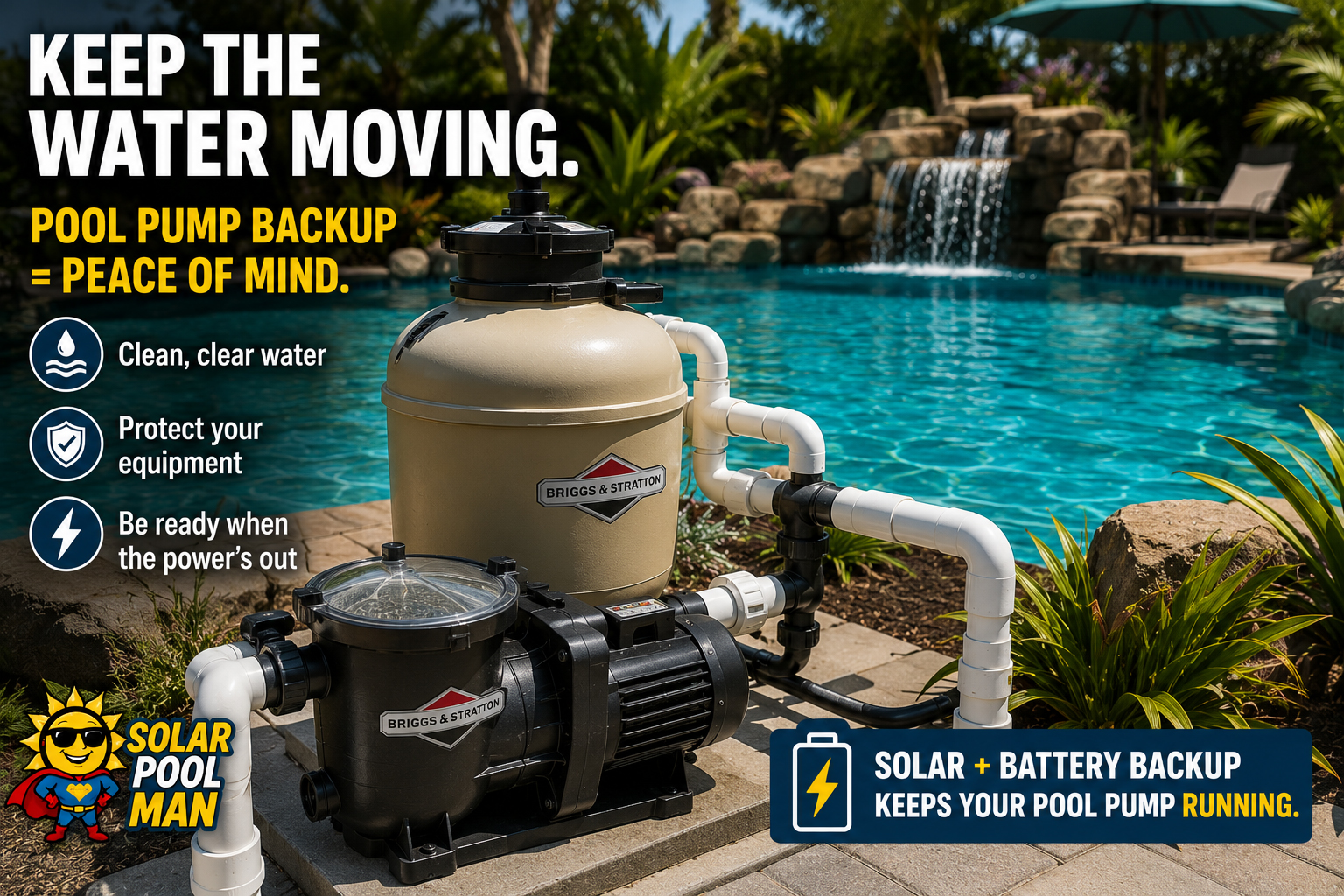
Heating depends on circulation. Start with the pump before promising hot water.
Review Pump Backup
Automation decides when heating happens. Solar Pool Man wants that schedule to make sense.
Open Automation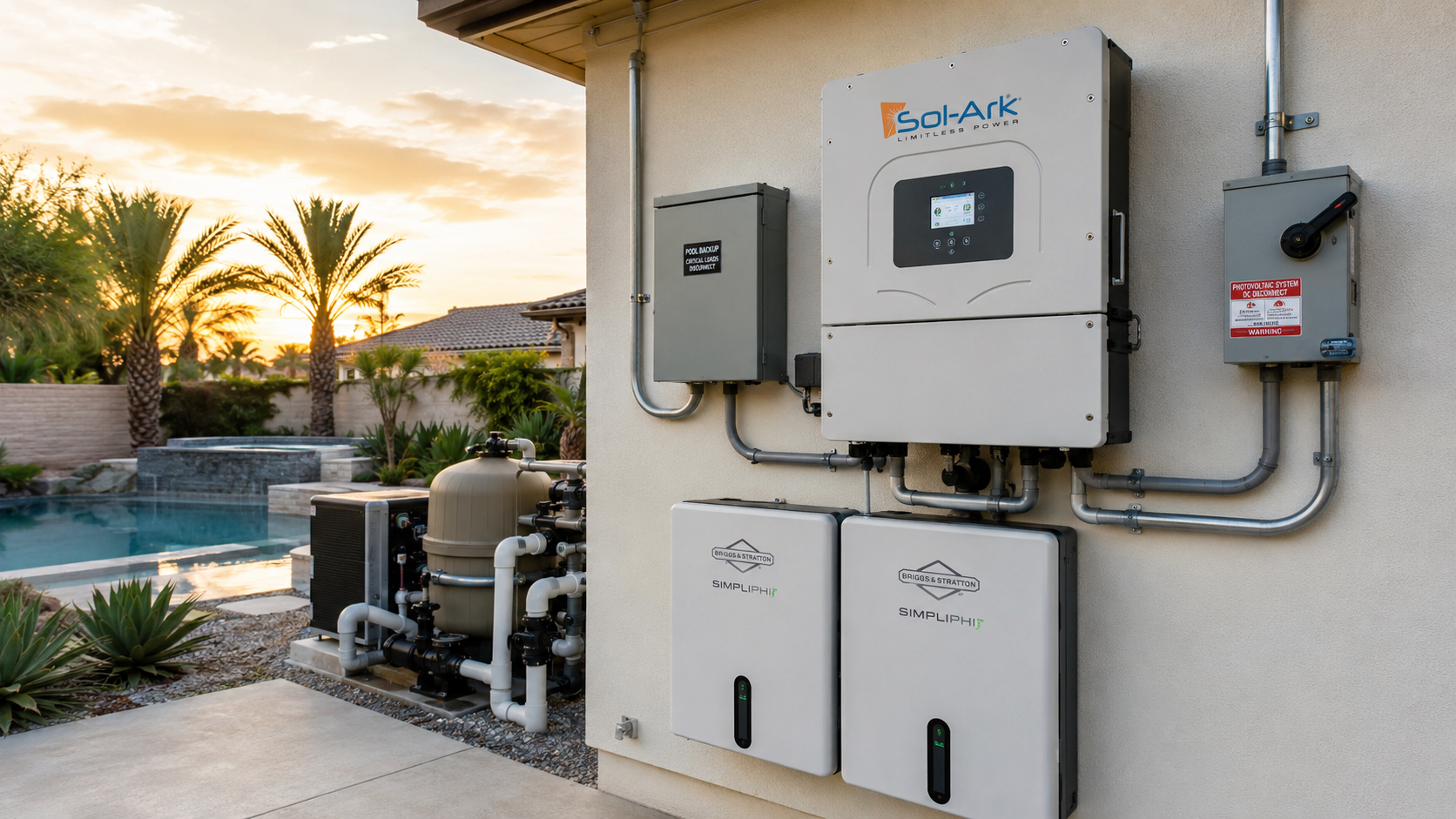
Batteries are powerful, but heating loads can be hungry. Review capacity before making promises.
Review BackupThe heater belongs in the conversation, but it should not bully the battery. Start with facts: equipment type, electrical demand, pump dependency, controls, schedule, and homeowner priorities.
Heater systems can involve electricity, gas, water, controls, pumps, safety interlocks, code requirements, and manufacturer specifications. Solar and battery design should be coordinated with qualified pool, electrical, and heating professionals before any backup assumptions are made.