🏊
The pool looked calm
Blue water, clean tile, perfect afternoon. Nobody suspected the pump motor was training for the electric-bill Olympics.
Solar Pool Man is the sunglasses-wearing, skimmer-net-carrying, battery-spec-reading hero who understands that a pool is not just water. It is pumps, controls, lights, chemistry, automation, and a utility bill wearing swim trunks.

Solar Pool Man appears when the homeowner realizes the pool pump is not a tiny appliance. It is a serious electrical load with a schedule, a runtime, a motor, and a habit of showing up on the bill like it owns the house.
His mission is simple: identify the pool equipment loads, separate what matters, and design solar plus battery logic that keeps the right circuits supported.
The homeowner thought the pool was peaceful. The meter knew better. Then came the blackout, the pump stopped, the waterfall went silent, and the backyard suddenly felt like a very expensive pond.
Blue water, clean tile, perfect afternoon. Nobody suspected the pump motor was training for the electric-bill Olympics.
Peak rates arrived. The utility bill put on goggles, climbed the diving board, and performed a financial cannonball.
He brought solar logic, battery backup thinking, and the calm authority of a man who has read both pump labels and inverter manuals.
A serious pool-power design starts with equipment reality. What runs? How many watts? For how long? What must operate during an outage? What can wait? What should be scheduled during solar hours?
Pool pump, spa pump, blower, automation, salt system, lights, heater controls, fountains, waterfalls, and outdoor circuits.
Not everything deserves battery backup. The critical circuits should be separated from the backyard luxury circuits.
When possible, run pool equipment during solar production hours instead of letting it splash around in peak-rate territory.
Solar, batteries, inverter capacity, circuit separation, and practical runtime expectations all have to work together.
“A pool pump is not background noise. It is a motor with a utility account.”
— Solar Pool Man, checking the load label before touching the thermostatThe backyard may feel like a resort, but electrically it is a cluster of motors, controls, lights, timers, relays, and panels. That is where the real design conversation starts.

A pool can be wonderful. A pump can be necessary. A waterfall can be beautiful. The problem begins when nobody thinks about when the equipment runs, what it costs, and what happens when power fails.
“Do not blame the pool. The pool is wet. The bill is dry and dangerous.”
— Solar Pool Man, after reading the SCE statementStart with the equipment that matters most, then build toward a smarter solar and battery plan.
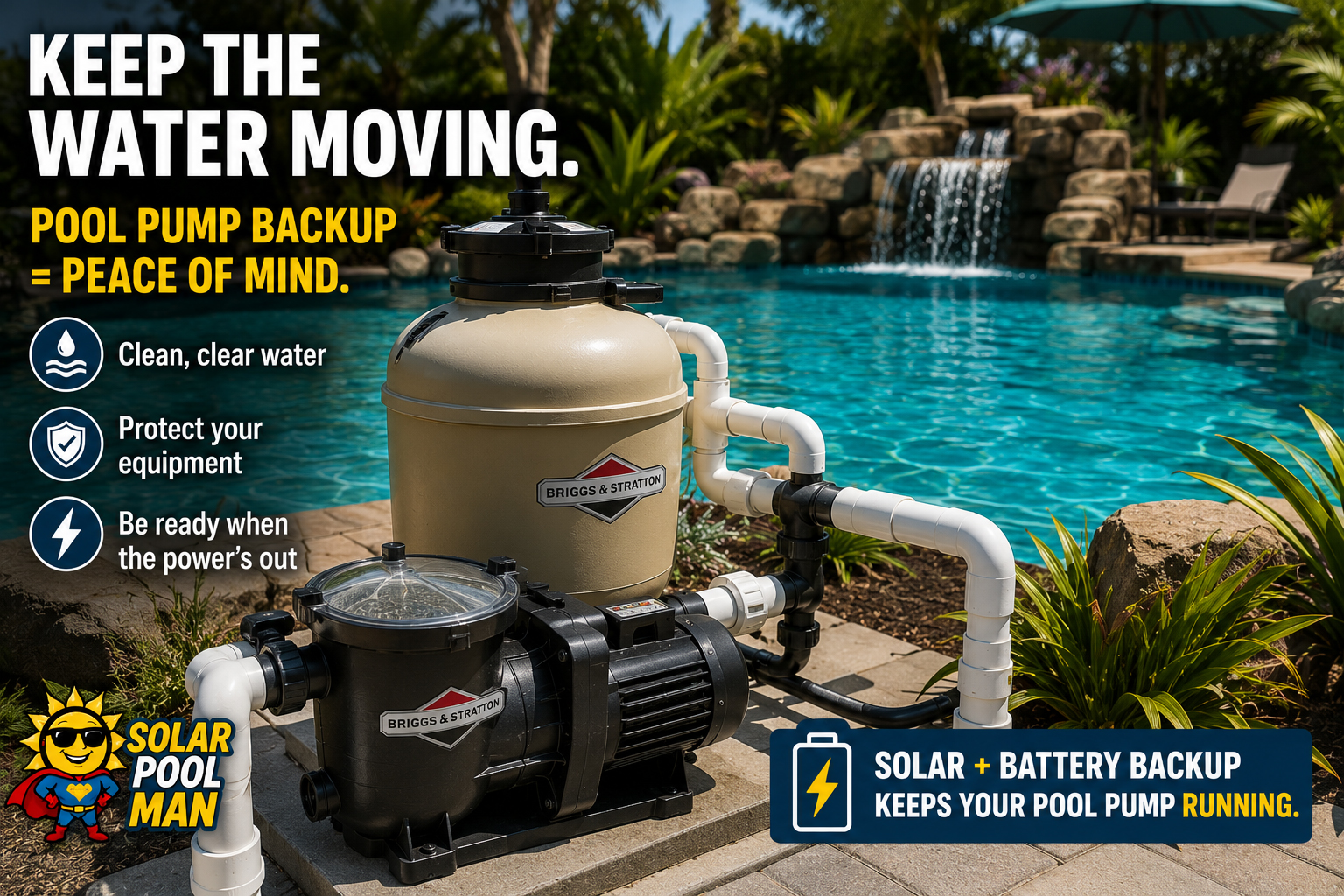
The main event. Water movement, filtration, scheduling, and backup thinking for the most obvious pool load.
Save the Pump
Moving water creates beauty, sound, cooling, and electrical demand. The feature pump wants its own conversation.
Open Water Features
Timers, relays, controllers, remote apps, and salt systems all need clean electrical planning.
Open AutomationPool equipment should be reviewed by qualified solar, electrical, and pool professionals. Pump horsepower, voltage, circuit layout, inverter capacity, battery size, runtime, code requirements, and utility rules all matter.