⏱️
Schedule
A good pool schedule should respect water quality, equipment needs, homeowner use, solar production, and expensive utility windows.
In expensive utility territory, pool equipment deserves attention. Pumps, heaters, spa equipment, salt systems, lights, waterfalls, fountains, and automation schedules can quietly turn a beautiful backyard into an electric-bill comedy act.

Pool equipment is often scheduled for convenience, habit, or old pool-service assumptions. But in modern rate territory, when the equipment runs can matter almost as much as what equipment is installed.
Solar Pool Man looks at the pool as a collection of scheduled electrical loads. The goal is to move useful work toward solar production hours where practical and reduce unnecessary operation during expensive periods.
The homeowner sees blue water. Solar Pool Man sees motors, schedules, circuits, and an electric meter wearing swim goggles.
A good pool schedule should respect water quality, equipment needs, homeowner use, solar production, and expensive utility windows.
A pump running too long, too hard, or at the wrong time can make the pool look innocent while the bill misbehaves.
Battery backup can support selected circuits, but the design should protect priorities, not power every luxury splash.
The first move is not always more equipment. Sometimes the first move is better scheduling: pump, salt system, water features, and heating logic should be reviewed against daylight solar production.
Pump, salt system, heater controls, spa equipment, lights, automation, waterfalls, and fountains.
Determine when each load runs and whether it overlaps with costly utility windows.
Shift appropriate pool work toward solar production hours while preserving water quality and safety.
Use battery capacity for selected circuits with practical runtime goals and clear priorities.
“The pool pump did not read the rate schedule. That is why Solar Pool Man carries a clipboard.”
— Solar Pool Man, rescuing the backyard from lazy timersPool loads can hide in plain sight. The pump is obvious. The automation panel may be quiet. The salt system depends on circulation. The heater may involve both control power and serious energy. The waterfall might be a decorative diva with a motor.
Solar Pool Man inventories the backyard before proposing the cure.
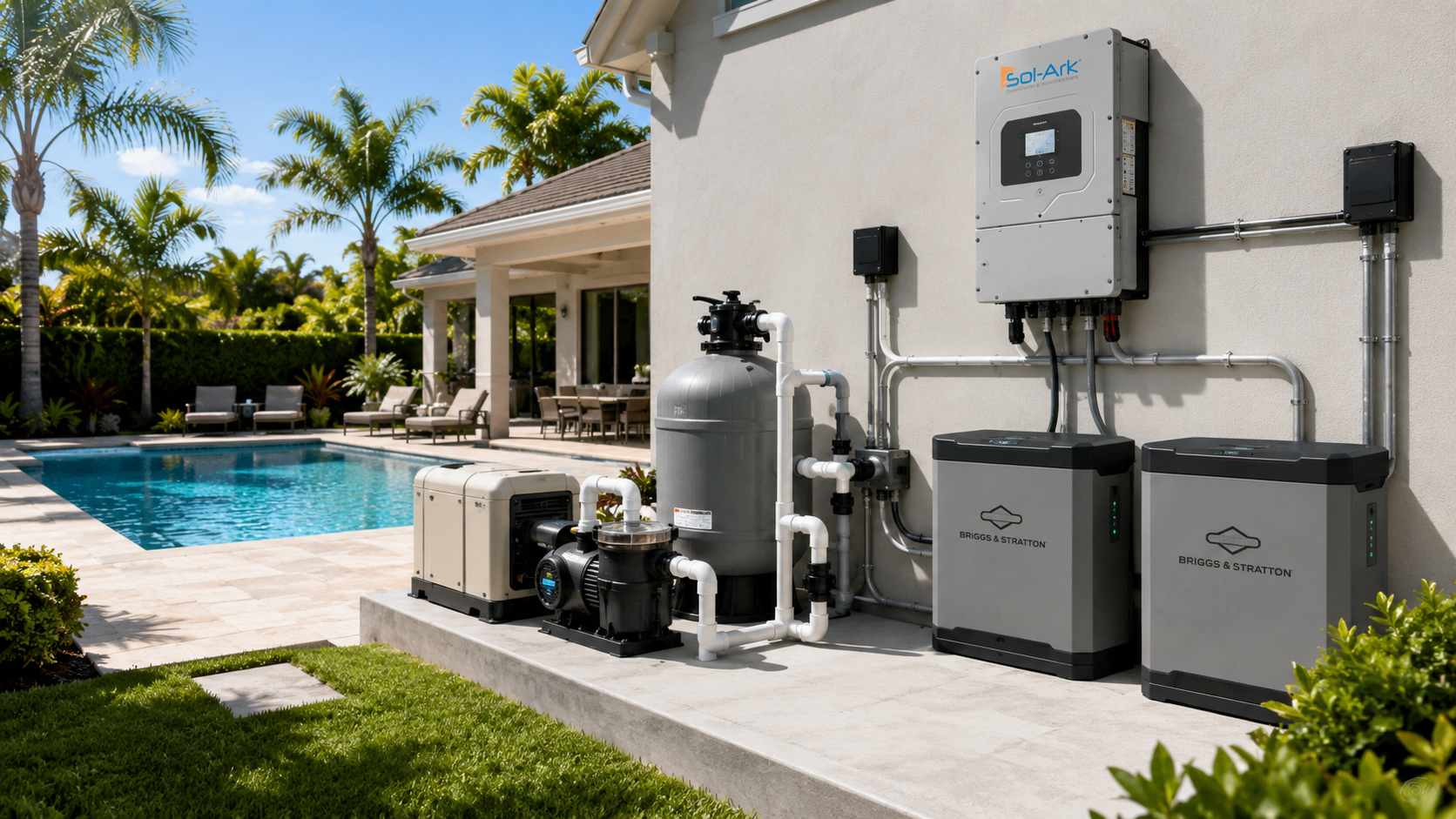
Solar can help offset daytime pool loads. Battery backup can support selected circuits after dark or during outages. But batteries should not be asked to carry every water feature, heater, spa party, and mystery circuit just because the backyard looks expensive.
“The battery is not a pool boy. It has limits.”
— Solar Pool Man, after denying a waterfall’s emergency appealThe bill problem is easier to understand once the backyard equipment stops hiding behind the palm trees.
| Pool Load | Rate Question | Solar Pool Man Move |
|---|---|---|
| Main pump | When does it run, and for how long? | Review runtime and shift appropriate circulation toward solar hours. |
| Variable-speed pump | What speed settings are used during each window? | Coordinate speed, filtration, and schedule with energy strategy. |
| Salt system | Does it generate only when the pump is running? | Align salt generation with circulation and daylight where practical. |
| Pool heater | Is heating happening during costly periods? | Separate comfort goals from critical backup and schedule heating carefully. |
| Water features | Are decorative pumps running when nobody is enjoying them? | Schedule ambiance during useful hours and limit unnecessary runtime. |
| Lighting | What lights matter for safety versus decoration? | Use selected lower-load lighting as practical nighttime backup candidates. |
| Automation | Is the controller helping or hurting the schedule? | Review timers, relays, app habits, and peak-period overlap. |
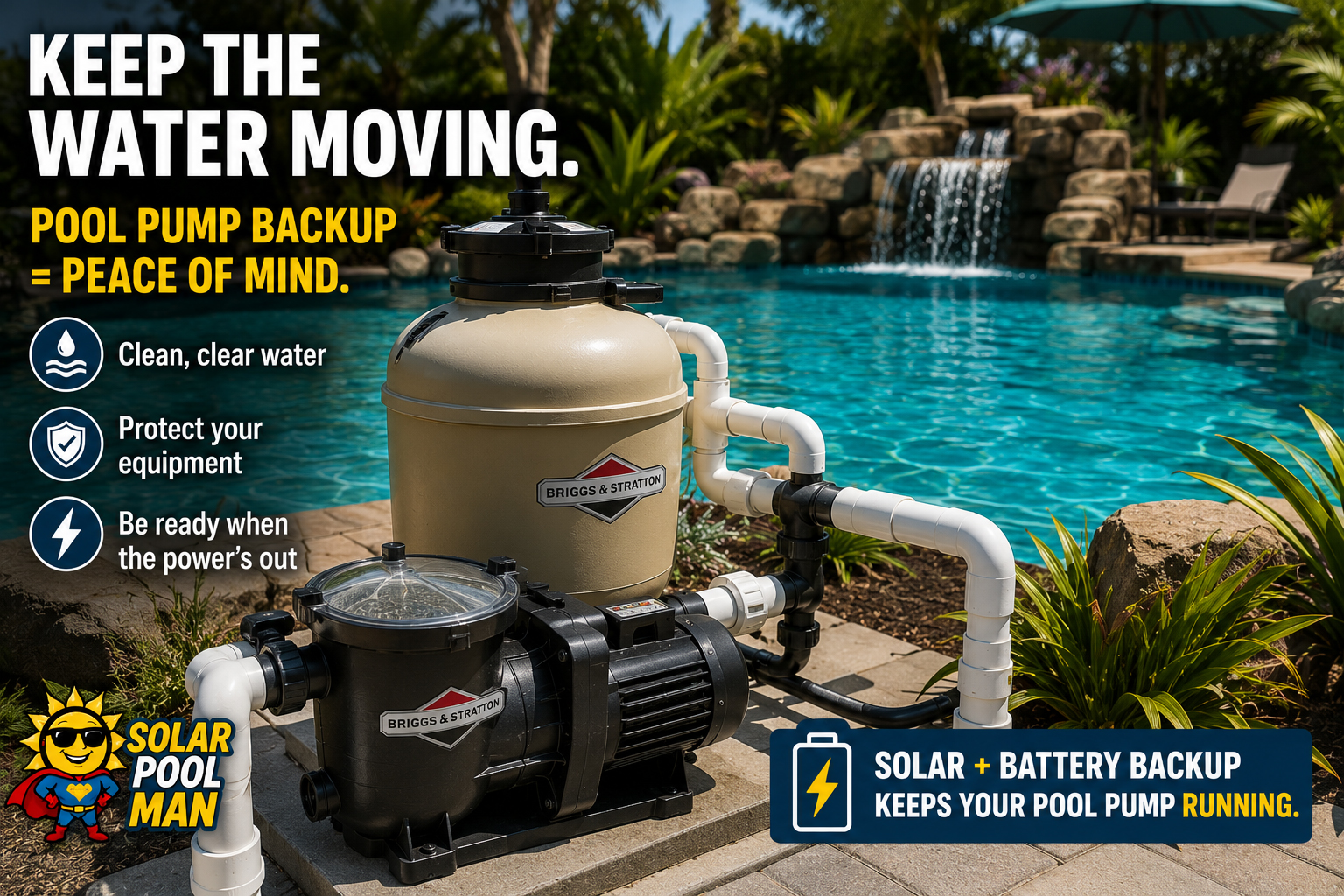
The pump is usually the first big load to review. Runtime, speed, and schedule matter.
Review Pump Backup
Automation can help avoid bad schedules, or it can automate the problem beautifully.
Open Automation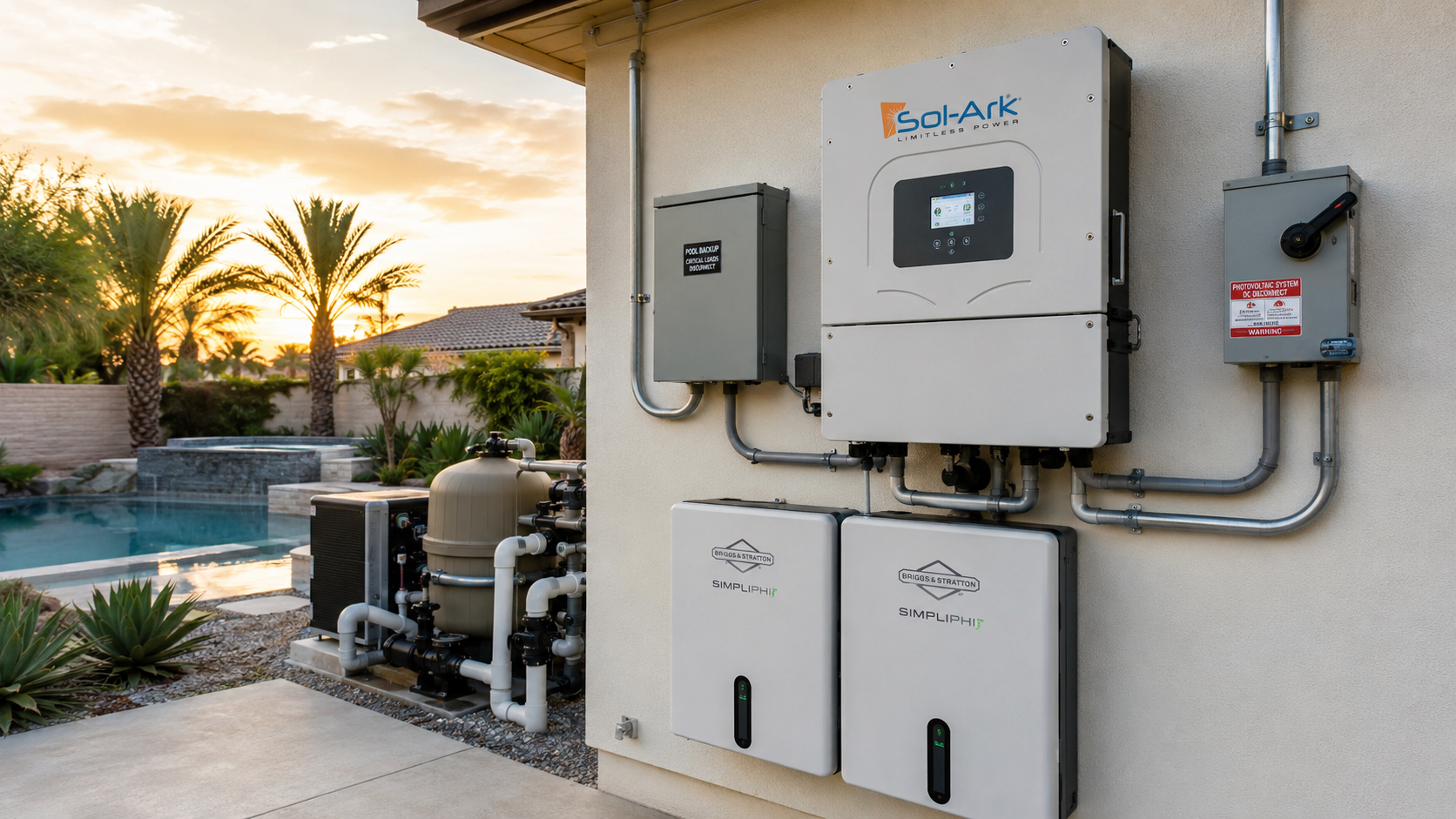
Batteries can protect selected loads, but they need discipline, circuit selection, and honest runtime expectations.
Review Battery BackupPool equipment should be reviewed around solar production, peak-rate periods, backup priorities, and real homeowner use. The timer is not the boss. The design is the boss.
Rate plans, utility rules, solar export values, pool equipment behavior, and backup design can change. Pool and electrical systems should be reviewed by qualified professionals. ABC Solar can help evaluate solar and battery strategy, but the design should be based on real equipment, real circuits, and current utility conditions.