🔌
Circuit selection
The backup design must decide which circuits are actually connected to the backed-up system. Hope is not a breaker.
Solar makes power when the sun is working. Batteries help carry selected loads when the sun is gone, the grid is down, or peak-rate trouble is lurking near the pool equipment. The key word is selected. Solar Pool Man does not back up chaos.
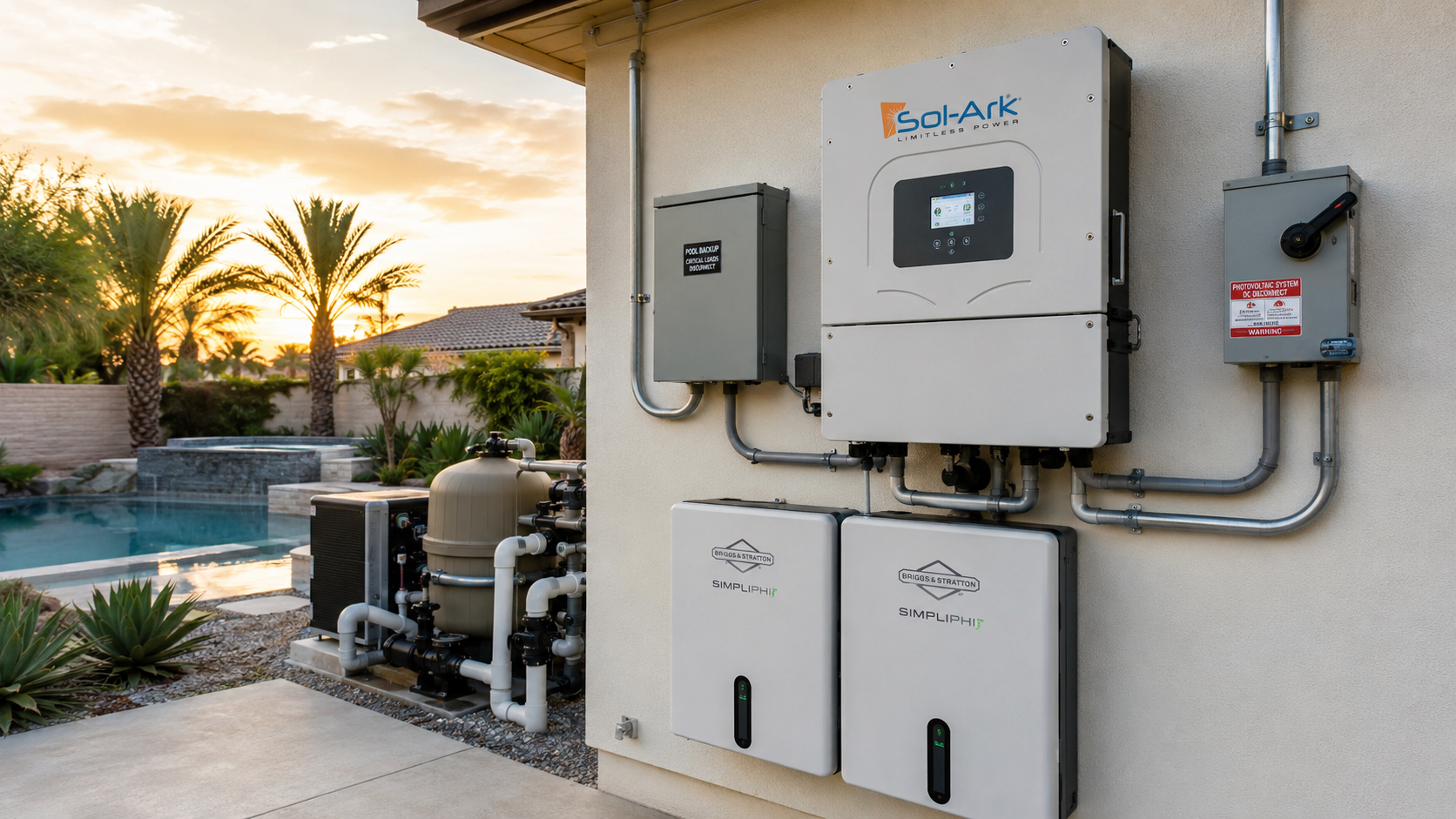
Battery backup works best when the loads are chosen carefully. Pool pumps, automation panels, salt systems, lighting, water features, and heater controls all have different priorities and different electrical appetites.
Solar Pool Man starts by separating must-run loads from nice-to-have loads. The battery should protect the backyard, not become a hostage to every waterfall and spa jet.
A battery can support selected loads only as long as the capacity, inverter, wiring, circuit selection, and load behavior allow. Solar Pool Man likes batteries. Solar Pool Man also likes facts.
The backup design must decide which circuits are actually connected to the backed-up system. Hope is not a breaker.
Motors, pumps, heaters, lights, and controls behave differently. The design must respect startup and running demand.
Runtime depends on battery capacity, load size, solar recharge, homeowner behavior, and how much the backyard insists on partying.
The pump may deserve a meeting. Safety lighting may deserve backup. A decorative fountain may need to sit quietly until the grid comes back.
Automation, timers, relays, and selected control circuits may be important because they coordinate the system.
Limited pump operation may matter for water quality, filtration, salt systems, and equipment protection.
Pool-edge, pathway, gate, and equipment-area lighting can provide high value with relatively modest loads.
Spa heating, waterfalls, party lighting, and decorative features may be beautiful but may not be blackout priorities.
“The battery is not your pool boy. It is your emergency manager.”
— Solar Pool Man, after turning off the decorative fountain with dignityA battery system usually does not automatically support every circuit on the property. The backed-up loads may be placed in a critical-loads panel or otherwise configured through code-compliant electrical design.
For a pool-focused backyard, that means identifying which circuits matter enough to earn battery power. Solar Pool Man does not let a mystery breaker sneak into the VIP room.

Pool pumps and feature pumps may have startup behavior, running current, variable-speed settings, and voltage requirements that must be reviewed before backup promises are made. A battery design must respect the equipment, not flatter it.
“A pump does not care about your vibes. It wants voltage.”
— Solar Pool Man, reading the nameplate before making promisesThe battery plan gets stronger when every load has a reason for being backed up.
| Load | Backup Question | Solar Pool Man Decision |
|---|---|---|
| Main pool pump | Does it need limited outage runtime? | Review pump size, voltage, speed, startup, and water-quality goals. |
| Automation panel | Does control power help operate selected backed-up equipment? | Back up controls only if the connected equipment plan makes sense. |
| Salt system | Will circulation also be available? | Do not back up salt generation without pump and flow logic. |
| Pool lights | Are they safety, security, comfort, or decoration? | Prioritize safety and visibility lighting before party lighting. |
| Waterfalls / fountains | Are they decorative or functional? | Decorative water can usually wait; living water may deserve review. |
| Heaters / spa loads | Is this a control load or a large heating load? | Heating loads require serious capacity review and may not be backup candidates. |
| Outdoor outlets | What will actually be plugged in? | Mystery outlets can destroy runtime assumptions. Identify the use first. |
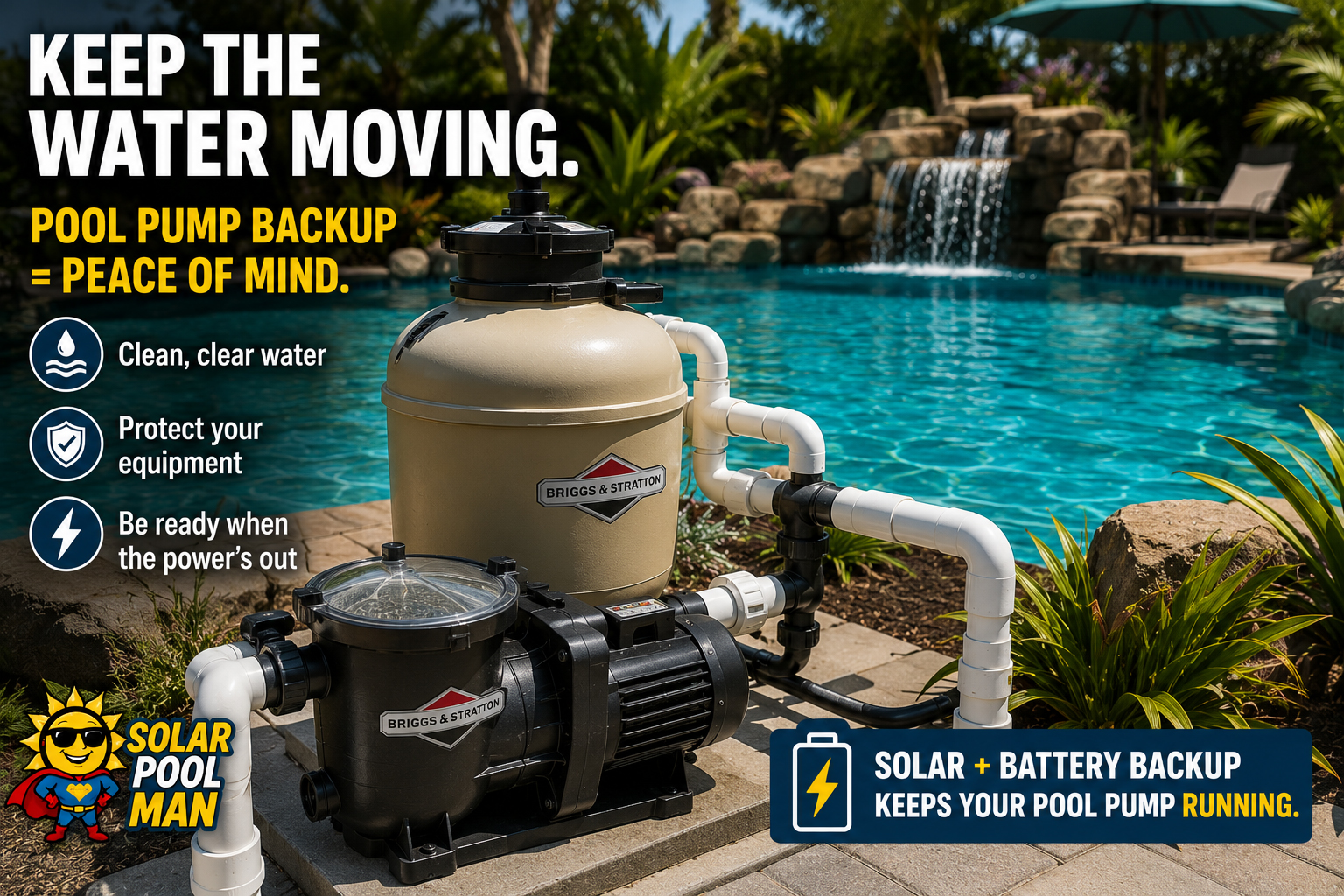
The pump is the first major backyard load to review for limited backup operation.
Review Pump Backup
Lighting can be a smart lower-load backup priority when safety and visibility matter.
Open Pool Lights
The controller can help only when the backed-up circuits and schedules are designed correctly.
Open AutomationBatteries are best when they serve a defined mission: selected circuits, realistic runtime, known loads, safe wiring, and a homeowner who understands what is protected and what is not.
Battery systems, inverters, critical-load panels, transfer equipment, pool equipment circuits, grounding, GFCI protection, motor loads, manufacturer requirements, and local code rules must be reviewed by qualified electrical and pool professionals. Backup design should be based on real loads, real circuits, and realistic runtime expectations.