1
Inventory
List pumps, controls, heaters, salt systems, lights, water features, spa equipment, and outdoor circuits.
Solar Pool Man is not magic. The method is practical: review the backyard equipment, understand the circuits, move useful pool work toward solar production where appropriate, and reserve battery backup for selected loads with clear purpose.

The first mistake is thinking “the pool” is one thing. It is not. It is a pump, filter, automation panel, salt system, heater controls, spa equipment, lights, waterfalls, fountains, and sometimes a few mystery circuits with labels from the prehistoric era.
Solar Pool Man separates the pool into real equipment, then decides what should run, when it should run, and whether it deserves backup.
Good solar and battery planning starts with facts. The equipment pad tells the truth, even when the pool water is trying to look glamorous.
List pumps, controls, heaters, salt systems, lights, water features, spa equipment, and outdoor circuits.
Review voltage, breaker size, motor type, runtime, schedules, control logic, and real operating behavior.
Shift appropriate pool work toward daylight solar production while protecting water quality and equipment.
Support selected circuits with realistic inverter, battery, safety, and runtime planning.
The equipment pad is where the fantasy pool becomes a technical system. This is where the design starts.
Main circulation pump, variable-speed pump settings, spa pump, feature pumps, and any additional motor loads.
Automation panels, timers, app controls, relays, valves, sensors, and salt-system coordination.
Pool lights, landscape lighting, patio circuits, safety lighting, and security visibility around the yard.
“The pool does not need guesses. It needs a load list.”
— Solar Pool Man, asking why the breaker says “POOL???”A battery backup system should not be bullied by every backyard feature. During an outage, the waterfall may be beautiful but optional. A pump may need limited runtime. Safety lighting may matter. Automation may be useful only if the controlled circuits are also planned correctly.
This is the discipline step. Solar Pool Man ranks loads without being emotionally manipulated by spa bubbles.

Pool equipment often has scheduling flexibility. When practical, pump runtime, salt generation, and selected water-feature operation can be reviewed around solar production hours. The goal is not to ignore pool needs. The goal is to stop the timer from writing checks during expensive periods.
“If the sun is working, make the pool clock in.”
— Solar Pool Man, negotiating with a timer
Batteries bridge the gap between solar production, nighttime loads, peak-rate strategy, and outages. But batteries have limits. A correct design must account for inverter capacity, motor behavior, circuit layout, GFCI requirements, transfer equipment, battery size, and runtime goals.
The practical target is not “everything forever.” The practical target is “the right things for the right amount of time.”
The best pool-power plan is not complicated for the sake of being complicated. It is organized.
| Step | Question | Solar Pool Man Answer |
|---|---|---|
| Inventory | What equipment exists? | Name every pump, control, heater, light, salt system, and water feature. |
| Load review | How much power does it use? | Check voltage, breaker, nameplate, runtime, motor behavior, and schedule. |
| Priority | Does it matter during an outage? | Separate critical, useful, optional, and luxury loads. |
| Solar schedule | Can it run during daylight? | Move appropriate pool work toward solar hours while protecting water quality. |
| Battery plan | Should it be backed up? | Back up selected circuits only with realistic runtime and code-compliant design. |
| Owner expectations | What does the homeowner expect? | Define what works during outage mode and what intentionally stays off. |
Start with the pump, then move through the controls, lights, water features, rate strategy, and backup plan.
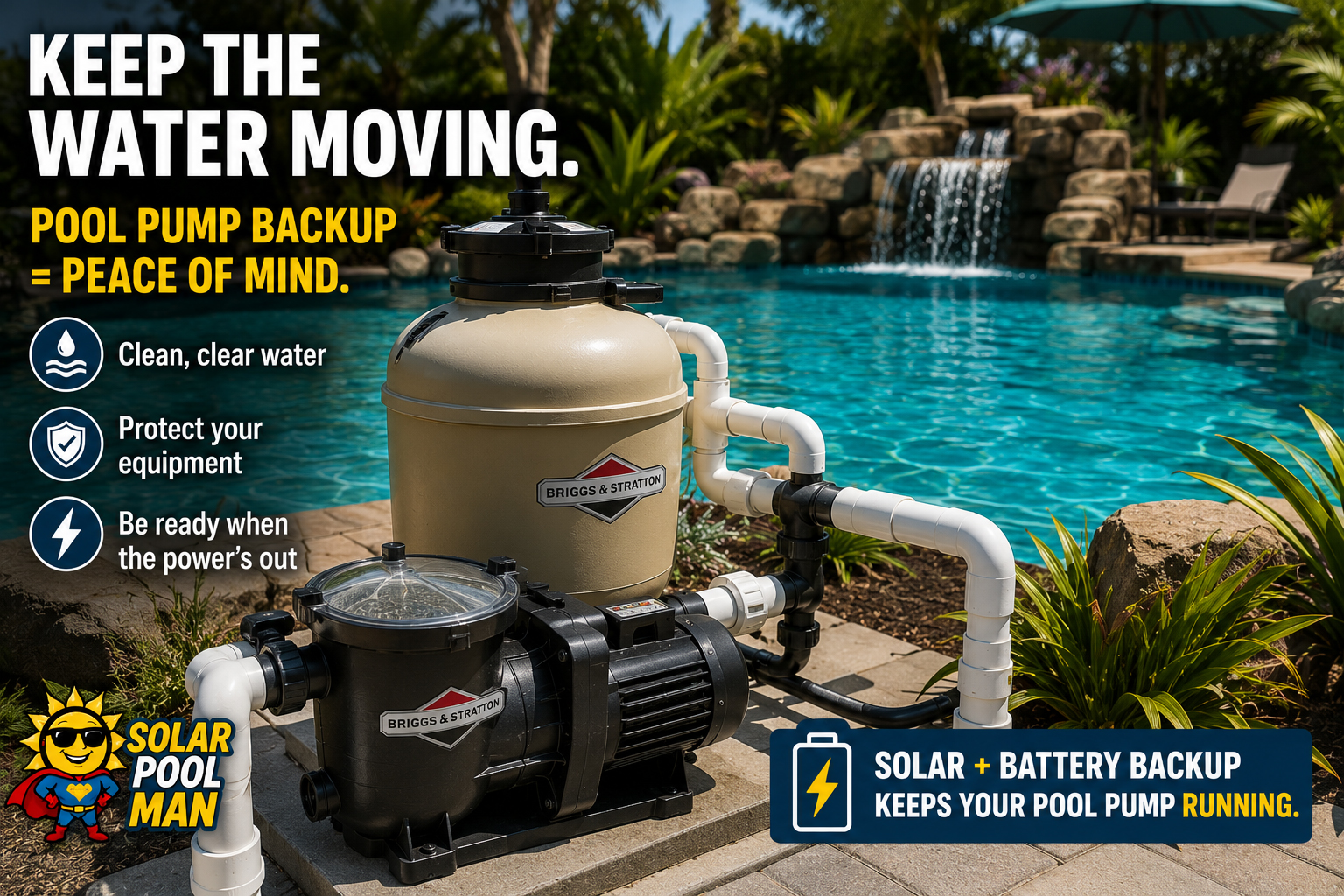
The main pump is usually the first serious pool load to review for solar scheduling and backup.
Start With the Pump
Timers and relays should support the energy plan, not automate expensive mistakes.
Open Automation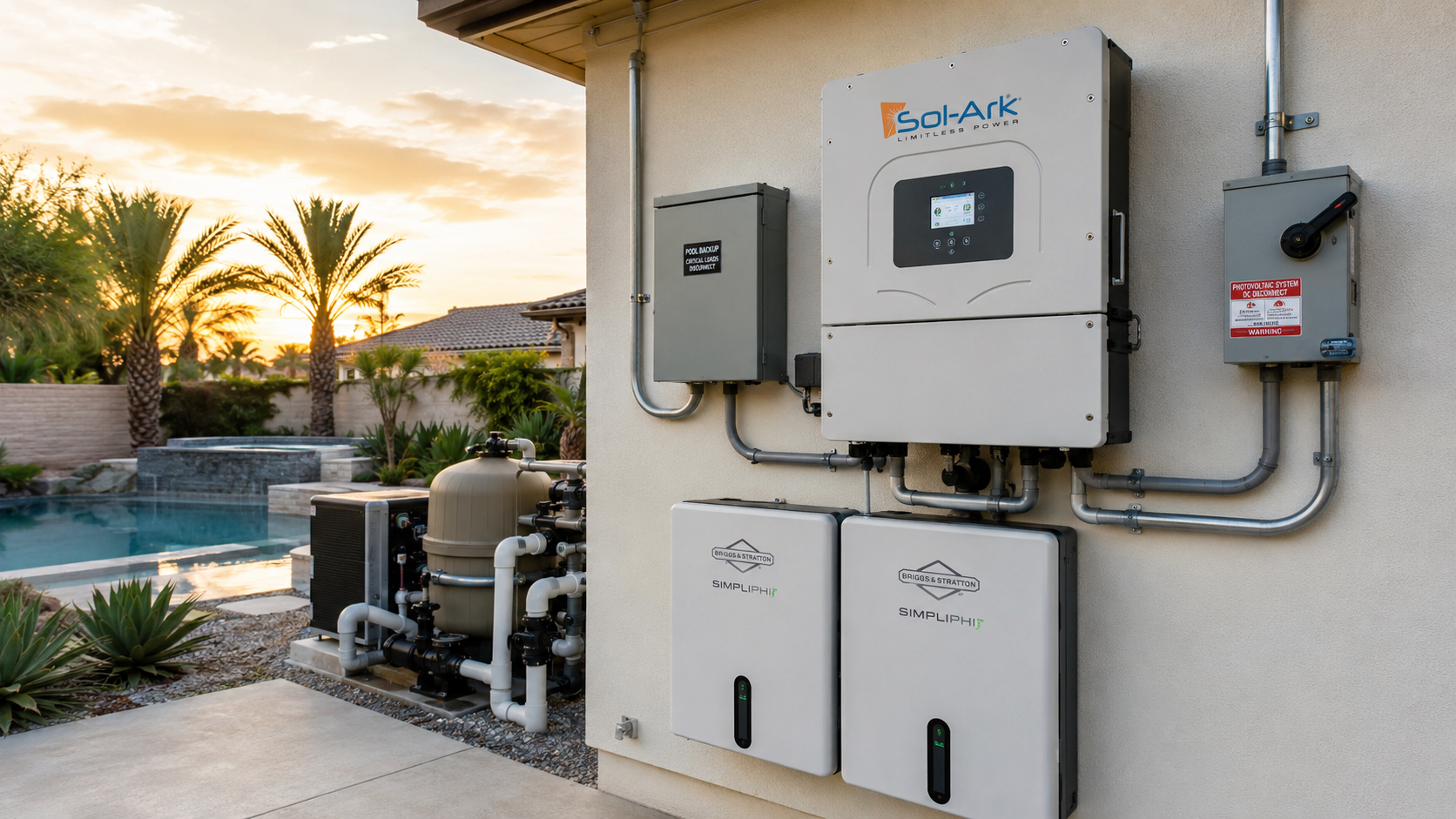
Battery backup is selected circuits, runtime math, and discipline. It is not backyard magic.
Review Battery BackupInventory first. Schedule second. Backup third. Comedy optional, but strongly encouraged.
Pool solar and battery backup planning should be based on real site conditions: equipment labels, breaker layout, voltage, pump behavior, GFCI protection, automation wiring, utility rules, local code, inverter capacity, battery capacity, and homeowner priorities. Qualified solar, electrical, and pool professionals should review the final design.